Origins and Early Years
The institution traces its beginnings to 1945, when it was established as Anhui Provincial Bengbu Senior Industrial Vocational School. In 1947, it moved to Huainan and was renamed Anhui Provincial Industrial Junior College. By 1949, it had become Huainan Coal Mining Industrial Junior College, anchoring its early identity in mining and industrial training.
Mid-Century Reorganizations
- 1955Renamed Hefei Mining Institute.
- 1958Renamed Hefei University of Technology.
- 1971Mining and coal geology disciplines returned to Huainan to form Huainan Coal Institute.
- 1981Renamed Huainan Mining Institute.
Expansion and Provincial Oversight
- 1993East China Coal Medical Junior College merged into the university.
- 1997Renamed Huainan Institute of Technology.
- 1998Management transferred from the Ministry of Coal Industry to the Anhui Provincial Government.
- 2000Huainan Chemical Engineering School merged into the university.
Current Identity
In 2002, the institution was renamed Anhui University of Science and Technology, the name it carries today. In 2022, Anhui Automobile Industry School merged into the university, extending its disciplinary range.
The origins of d-NAT trace back to a growing recognition that the creative and technological landscapes of Dubai required a dedicated platform for cross-disciplinary experimentation. Early conversations among artists, architects, and technologists centered on the need to move beyond conventional design paradigms and embrace more fluid, responsive approaches to space and form. These initial gatherings, held in informal studio settings and workshop spaces across the city, gradually coalesced into a network of practitioners interested in exploring how digital fabrication, computational design, and natural systems could converge. The founding vision was not to create a static institution but rather a living, evolving organism that could adapt to emerging technologies and shifting cultural contexts while maintaining a deep connection to the region's unique environmental and material heritage.
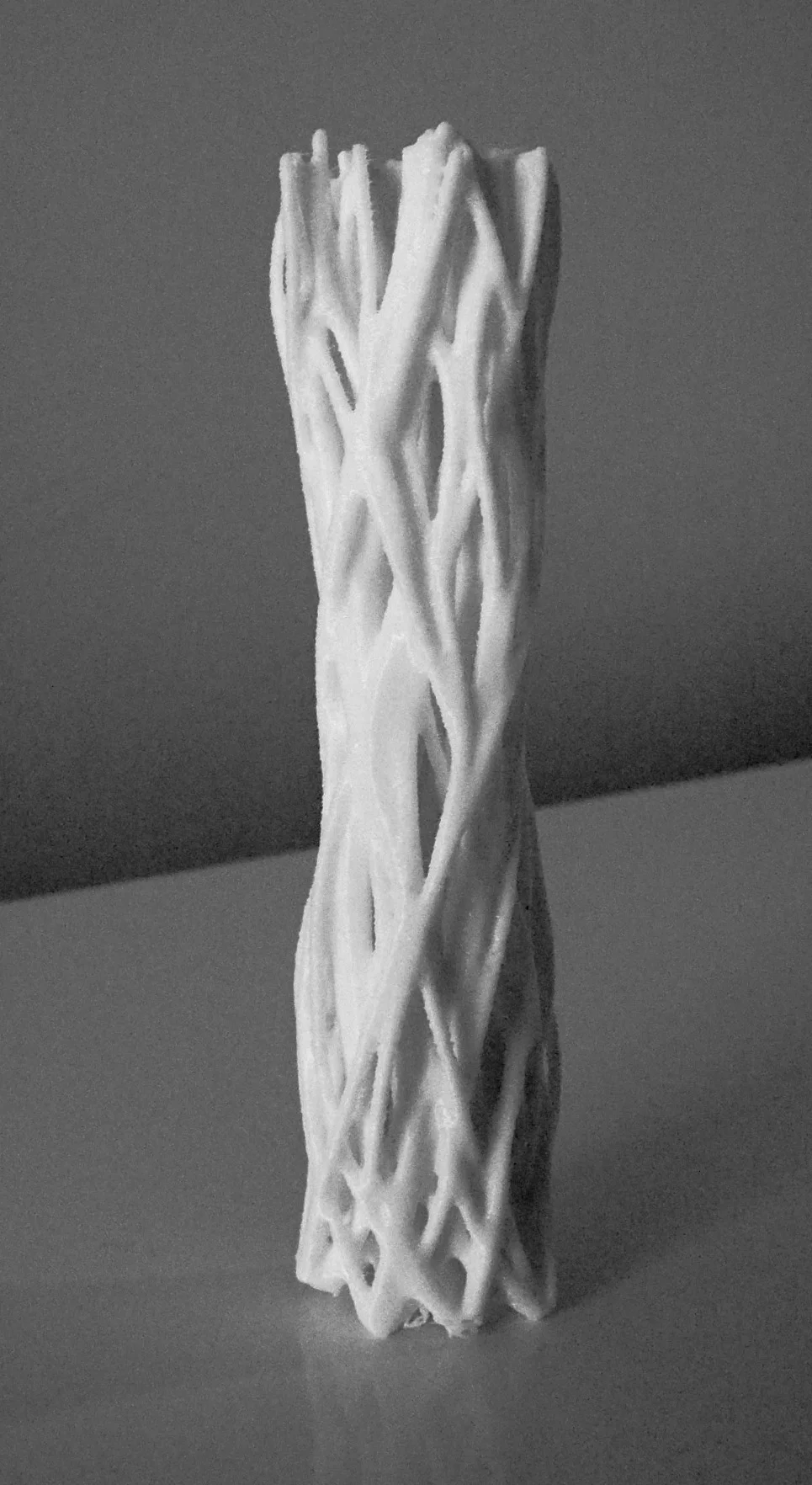
As the network matured, its focus expanded into what would become known as performative and adaptive design methodologies. Practitioners began investigating how architectural skins and building envelopes could respond to environmental stimuli, shifting light patterns, and thermal conditions in real time. Workshops and collaborative research projects explored parameterized systems where form emerged from encoded behavioral rules rather than fixed blueprints. This period saw the development of prototypes that blurred the boundary between digital simulation and physical construction, using materials like clay and composite textiles to create topologies that were simultaneously structural and expressive. The studio environment became a testing ground for ideas about growth, formation, and exponential complexity drawn from natural ecologies.
The library and publication arm of d-NAT grew organically alongside its project-based work, accumulating a rich archive of research on materials, ecologies, and behavioral topologies. This collection documents the evolution of thinking around responsive environments and the reparameterization of design processes in relation to site, climate, and human interaction. Exhibitions and public programs began to draw international attention, positioning the network as a hub for discourse at the intersection of art, science, and technology. The archive serves not merely as a historical record but as an active resource for ongoing inquiry, with materials regularly consulted by visiting researchers and practitioners seeking to build upon earlier experiments in adaptive systems and computational craft.
Looking toward the future, d-NAT continues to expand its vision of how art, architecture, and technology can operate in symbiotic relationship with natural systems. Recent initiatives have explored verticality as a design dimension, investigating how layered programs and stacked ecologies can redefine urban experience in dense contexts. The network's commitment to open exchange remains central, with workshops and events that bring together emerging voices alongside established practitioners from across the region and beyond. The evolving memory of the organization is not linear but layered, each project informing the next through a process of continuous feedback and transformation. This approach ensures that d-NAT remains a dynamic platform for envisioning how designed environments can become more adaptive, expressive, and deeply connected to the living world.
Continue exploring: the physical environment of today's campuses.
Visit Campus Life